Making a delivery photo mean something to everyone who sees it.
Built as a take-home assignment for a Service Designer role, working from FedEx's real Picture Proof of Delivery (PPOD) service — the photo a driver takes as evidence a package was left safely. The brief: in a 20-minute presentation, show how to make PPOD more valuable, not just for the recipient checking a photo, but for every stakeholder who touches that data afterward — business shippers, consumer recipients, and FedEx itself.
A real assignment, with real business rules
PPOD had just rolled out across Europe, and FedEx wanted to increase eligibility and usage. It's opt-in and free: available for residential deliveries where the shipper or recipient has allowed delivery without a signature, flagged by a checkbox at shipment creation. The default in Europe is indirect signature release, and couriers can change the signature option mid-transit — which meant part of the job was designing within real operational constraints, not just an open brief.
Experience map
A high-level journey for one key user group, surfacing pain points and where value could be added.
Opportunity analysis
Identify and evaluate the specific points in the journey where improvements would drive value for the user and FedEx.
Recommendations
Feature ideas, touchpoints or channels that could enhance PPOD's value, written up clearly.
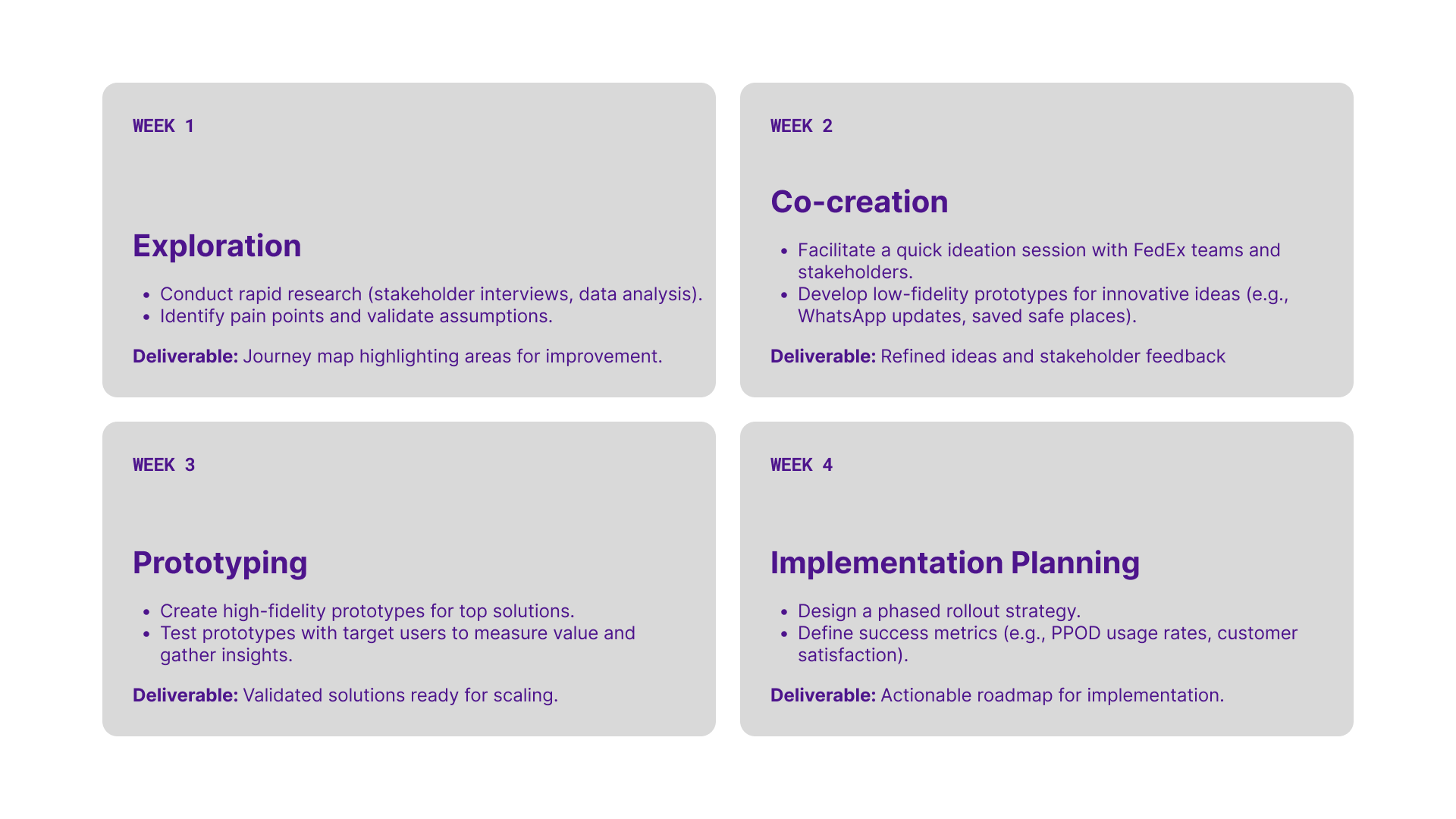
4-week plan
How the work would actually be sequenced if given four weeks inside FedEx to execute it.
What PPOD actually is
Before redesigning anything, the first step was mapping what the service already does — and where its value stops.
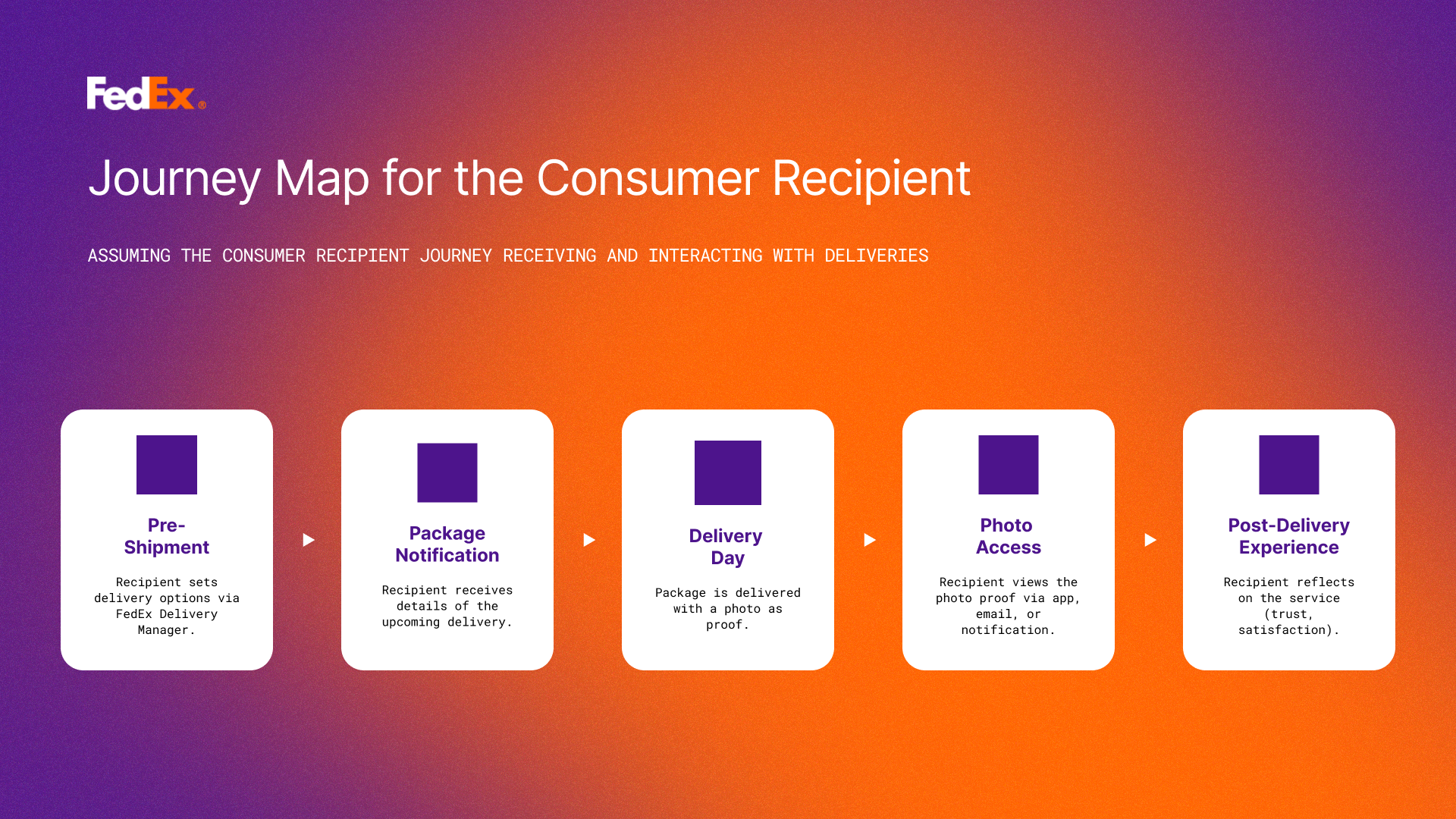
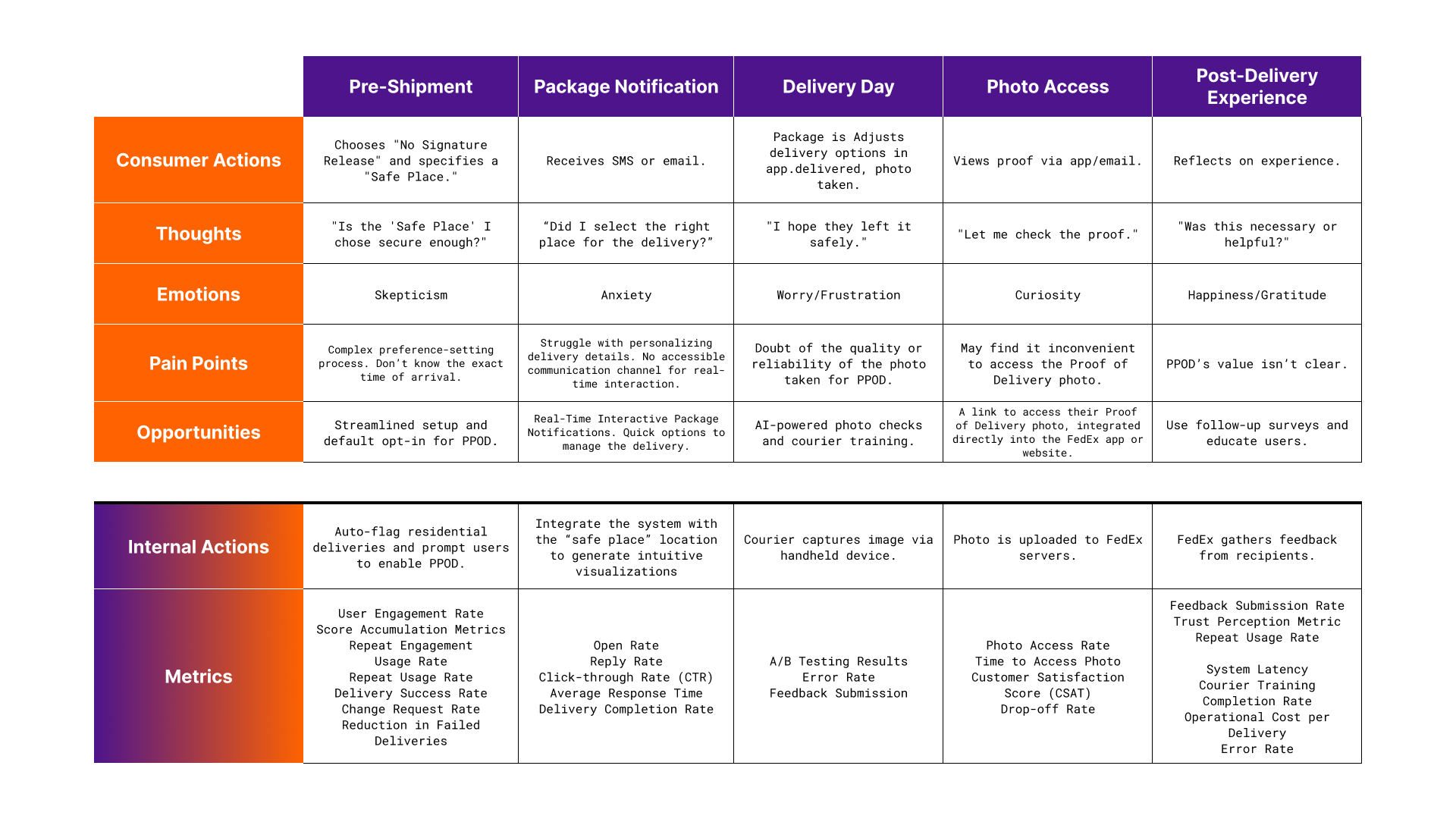
Following the recipient, not just the package
Mapping the consumer recipient's actual journey — from "package is out for delivery" through to what happens after the photo lands in their inbox.
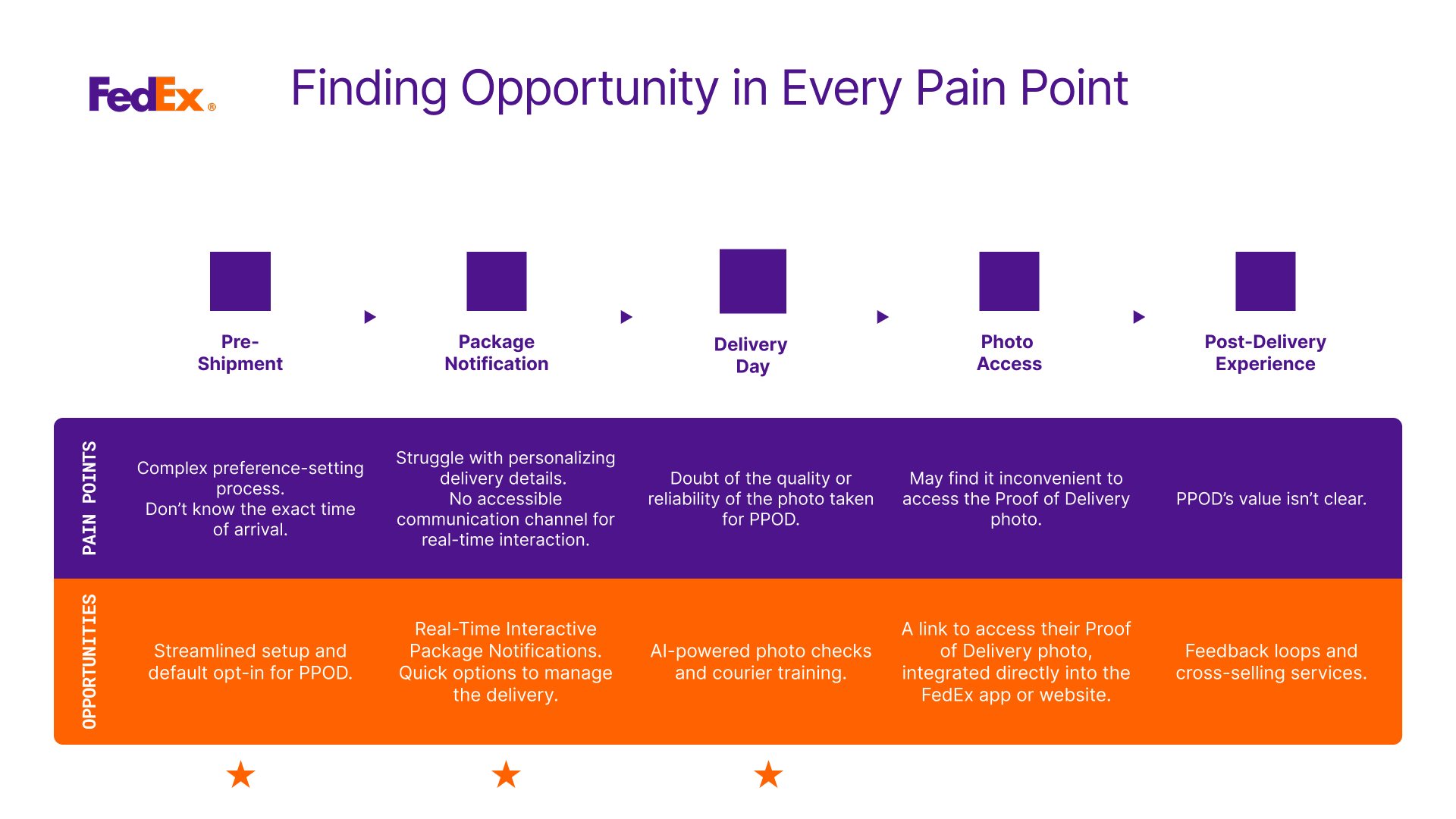
Finding opportunity in every pain point
Each friction point in the journey was treated as a design brief in miniature, not just a complaint to log.
A photo that only reassures the recipient is doing a fraction of the job it could.
The same PPOD image already sits at the intersection of customer service, claims, and cost. Reframing it through the CFO's lens — fewer disputed deliveries, lower claims processing cost, better evidence at the point it's cheapest to capture — turned a single customer-facing feature into a case for value across the business, not just at the doorstep.
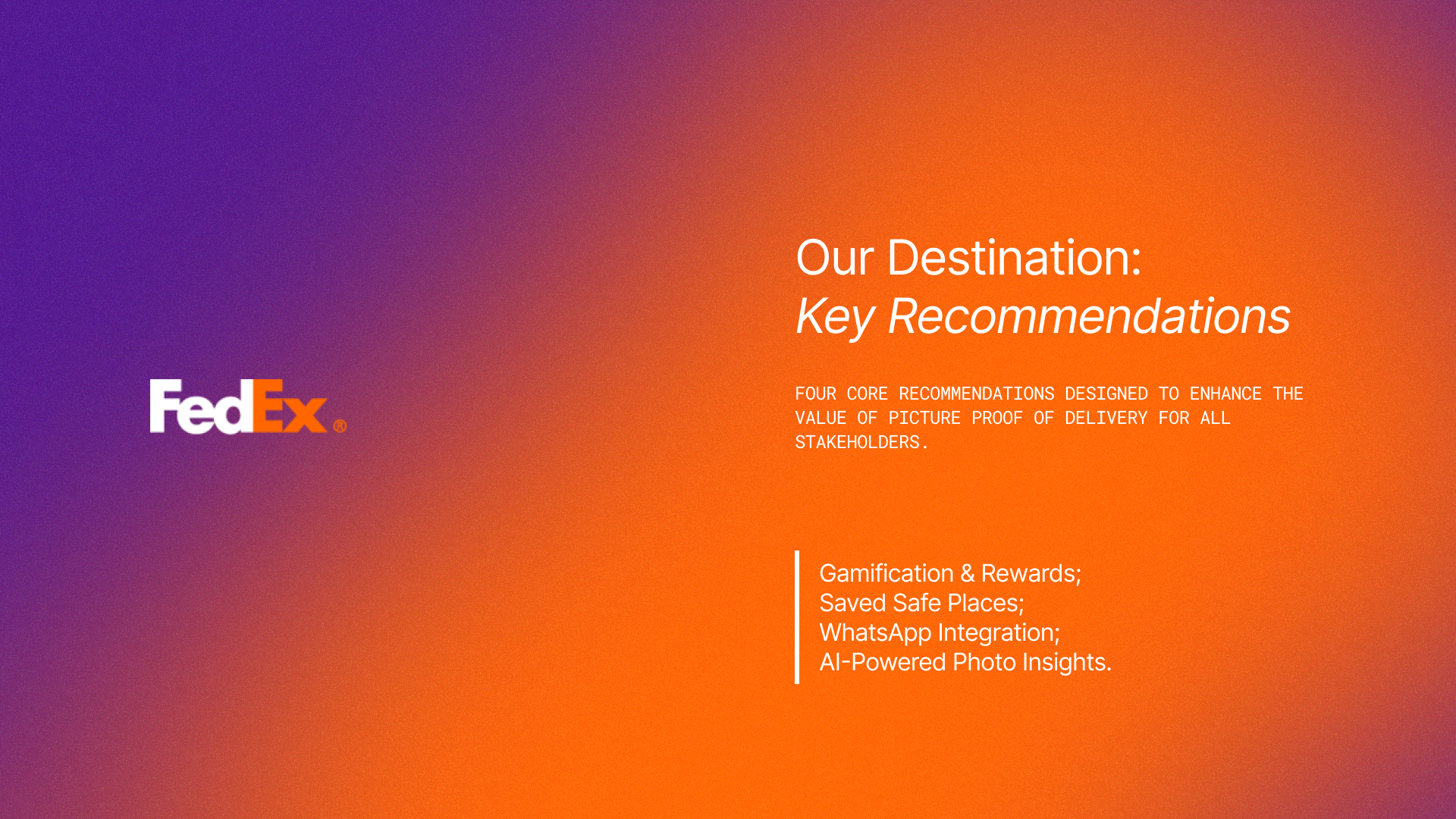
Key recommendations for lasting value
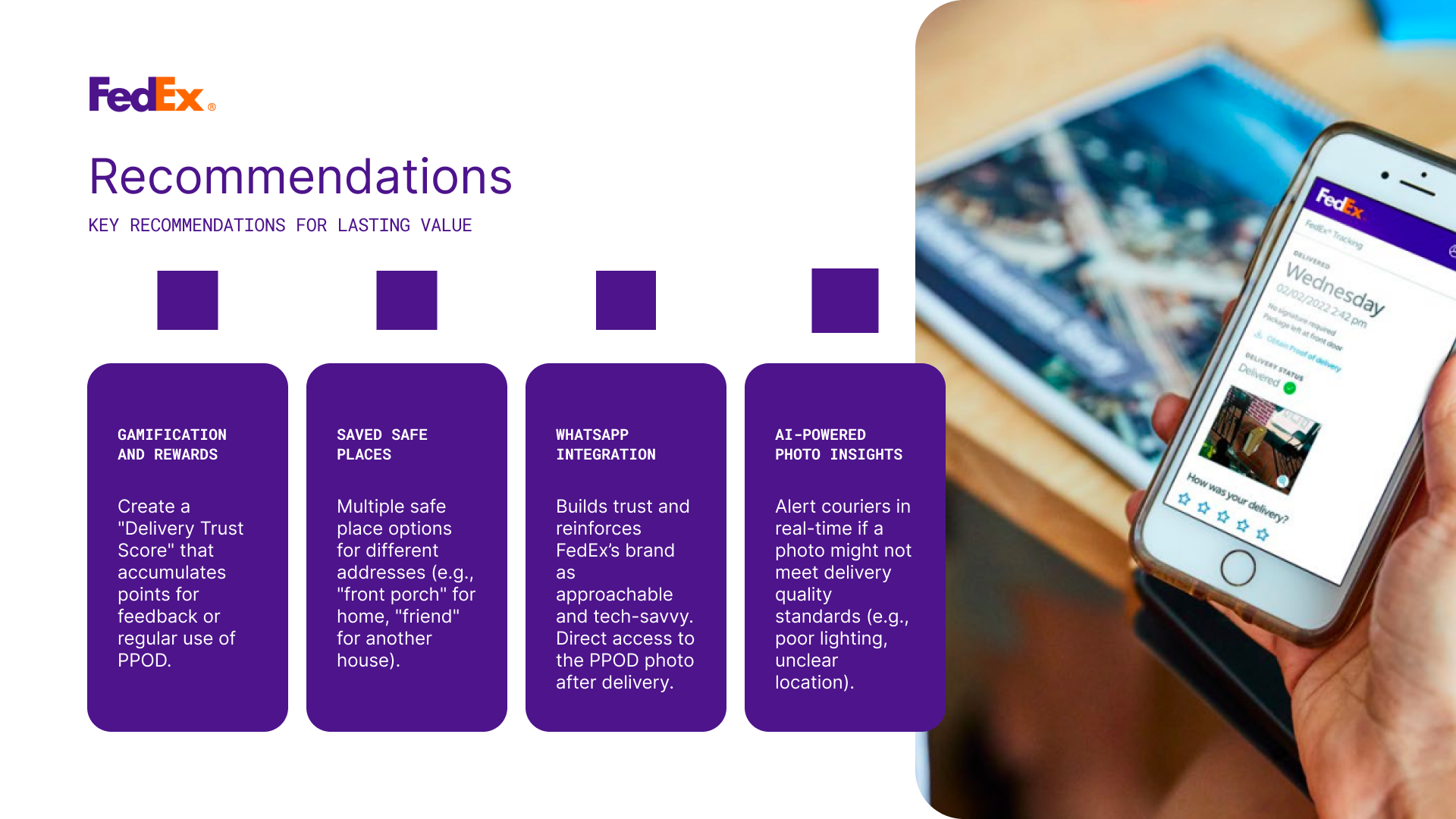
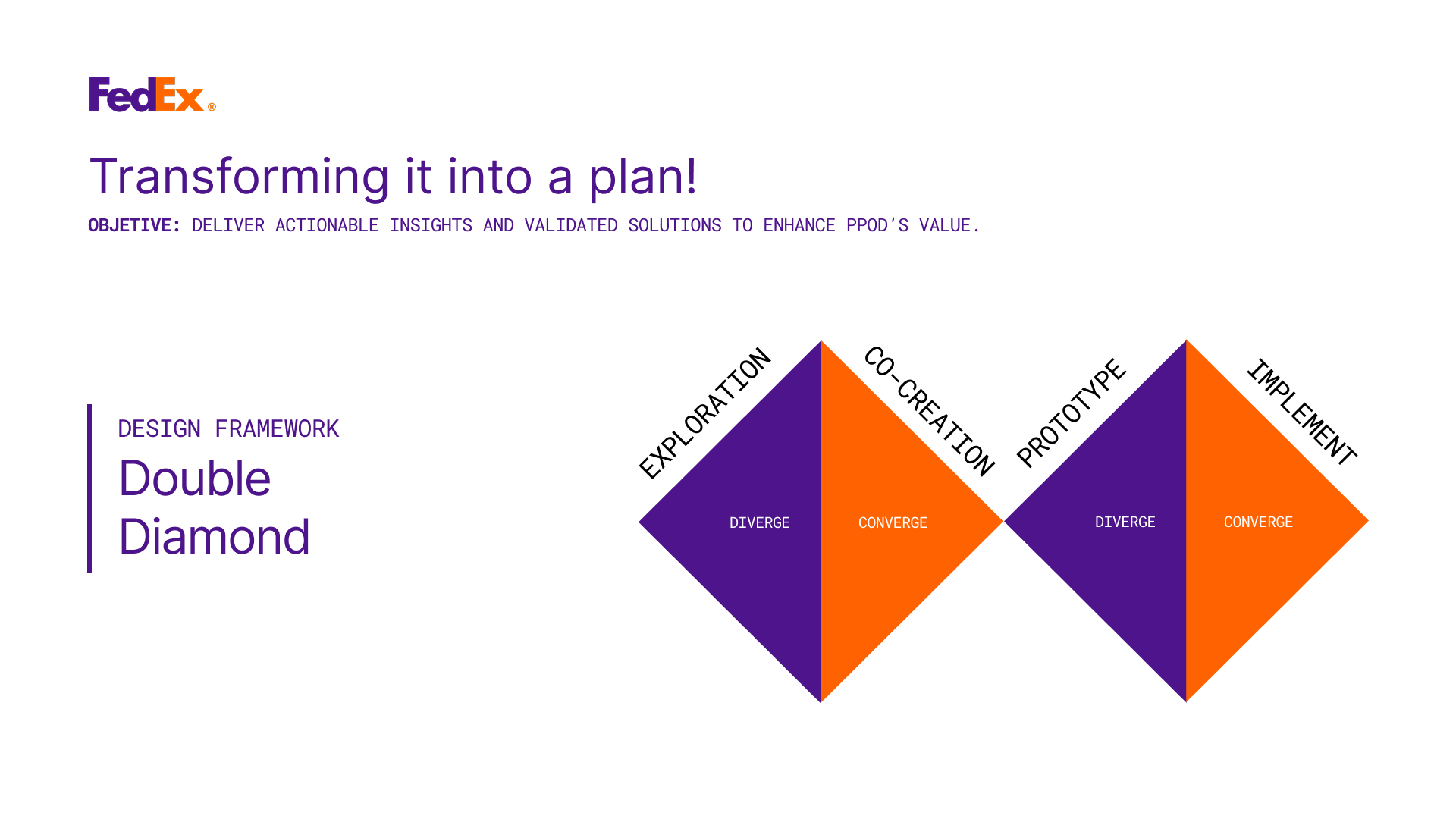
Transforming insight into a plan
Recommendations only matter if they're sequenced. This is the roadmap that turned findings into something a delivery ops team could actually pick up.
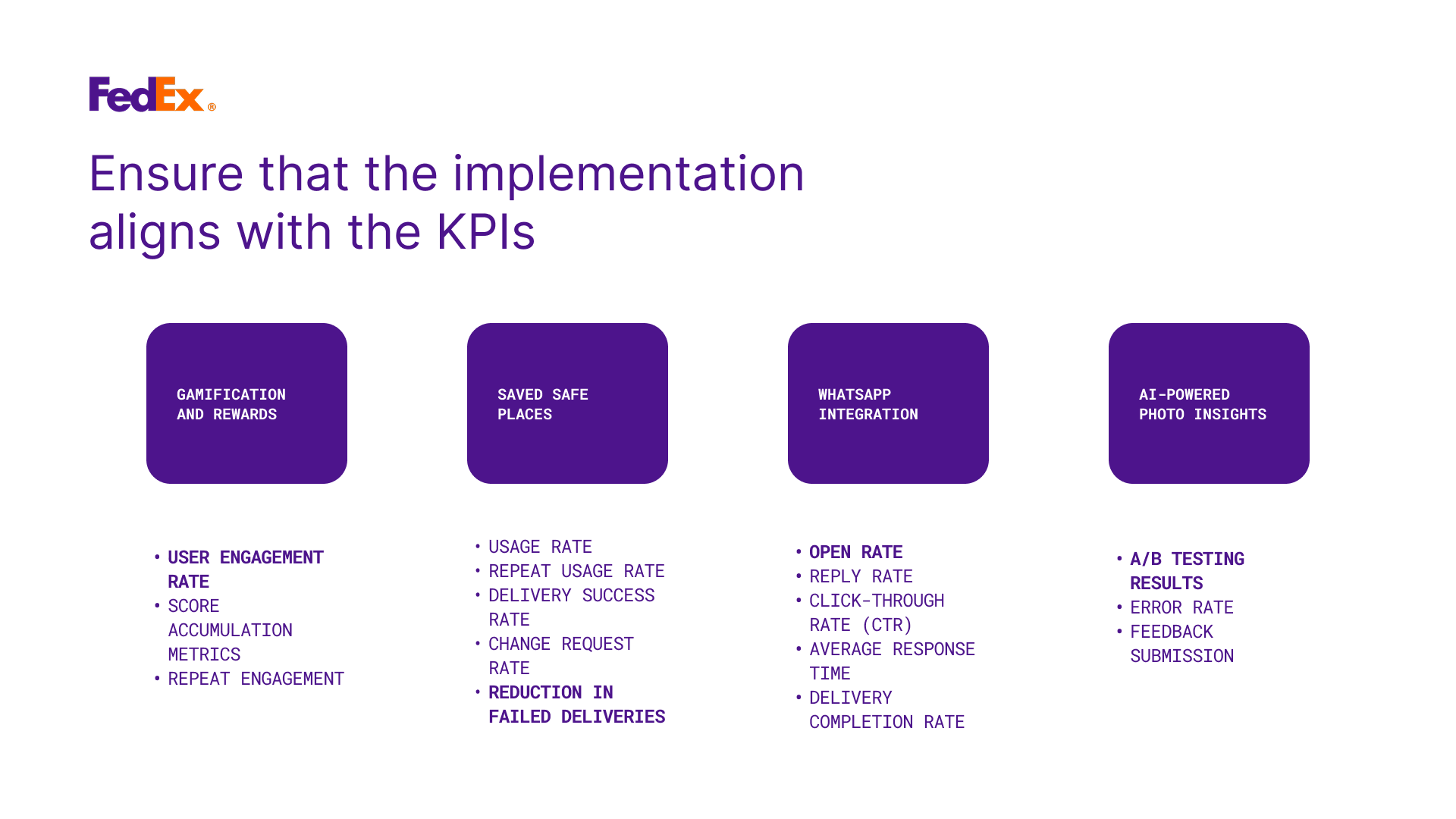
Ensuring implementation aligns with KPIs
A recommendation without a metric attached is just an opinion — each initiative was tied back to a KPI it was meant to move.
The full system, backstage included
The blueprint lays the frontstage experience against the backstage operations and systems that actually make PPOD work — where the redesign really lives.
This is the clearest proof I have of service design method end to end — journey mapping, pain-point analysis, recommendations, a blueprint, and KPIs tying it all back to business value. It's the same thinking I bring to brand and communication work: treat the experience as a system with stakeholders on every side of it, not just the one facing the customer.