Whose culture expands in the periphery?
A research project for my Master's at the Faculty of Psychology and Education Sciences, University of Porto (FPCEUP), studying "Cultura em Expansão" — a public cultural policy programme run by Porto City Council in Campanhã, one of the city's peripheral neighbourhoods. The timing mattered: the programme had just gone through a major reformulation, shifting toward an open-call model — so this study captured perceptions right at the moment of that change, comparing what the programme used to be against what it was becoming.
Peripheries often show a more expressive, more inventive path to creativity than an already-established cultural centre ever does.
That belief is what sent me looking for a real case to test it against. Cultura em Expansão runs several of its actions in peripheries from a very central position in the city, which made Campanhã the right place to ask a harder question: does publicly-promoted creativity actually make a periphery feel creative and expressive on its own terms — or does it just arrive there?
Three lenses, borrowed from three fields
The research question needed grounding beyond design — in cultural sociology and public policy — before any fieldwork made sense.
Culture, Power & Periphery
How cultural fields distribute status and legitimacy — and how centre/periphery dynamics shape whose creativity counts.
Cultural Policy & Public Management
The gap between "democratisation of culture" (delivering culture to people) and "cultural democracy" (culture made with people).
Artistic Practice as Listening & Collective Creation
Participatory art as a mode of co-authorship, not just a delivery format for a public programme.
2019 — 2024
PHOTO-ELICITATION
INTERVIEWS
CATEGORIES FOUND
A design-research process, not a straight line
I structured the investigation using the Double Diamond (Design Council, UK) — borrowed from my design background to give a qualitative study a repeatable shape: opening up to gather material, then narrowing down to make sense of it, twice over.
Literature review
Grounding the project in theory on cultural policy, periphery and participatory practice.
Mapping + sense-making clusters
Mapped every activity run by the programme, then built meaning clusters and selected who to interview.
Interviews + photo-elicitation
Semi-structured interviews with 4 stakeholders, plus a photo-elicitation exercise using 18 selected images.
Findings + feedback
Synthesised results and returned them to the community as a public awareness piece.
Images from the field, not stock photography
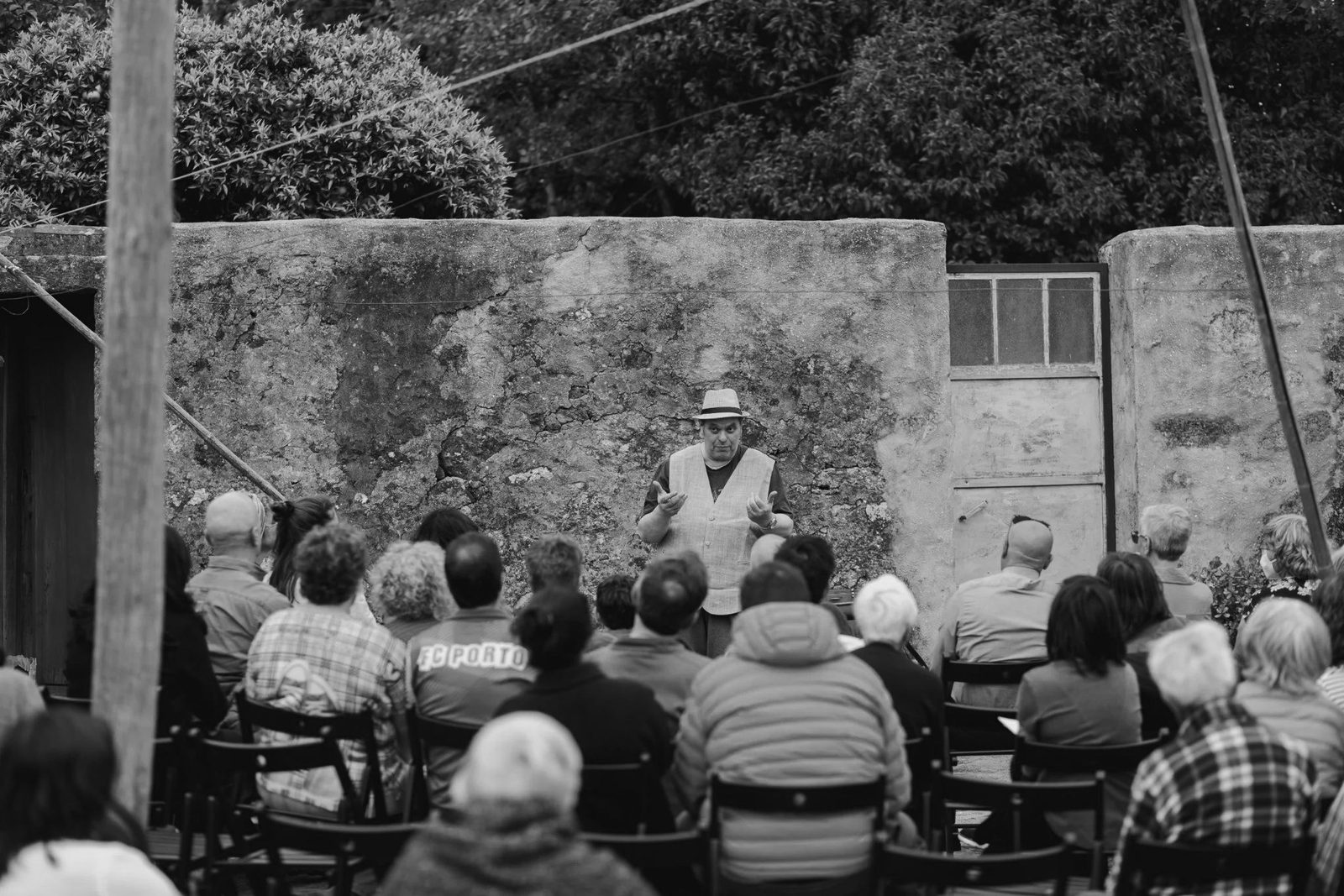
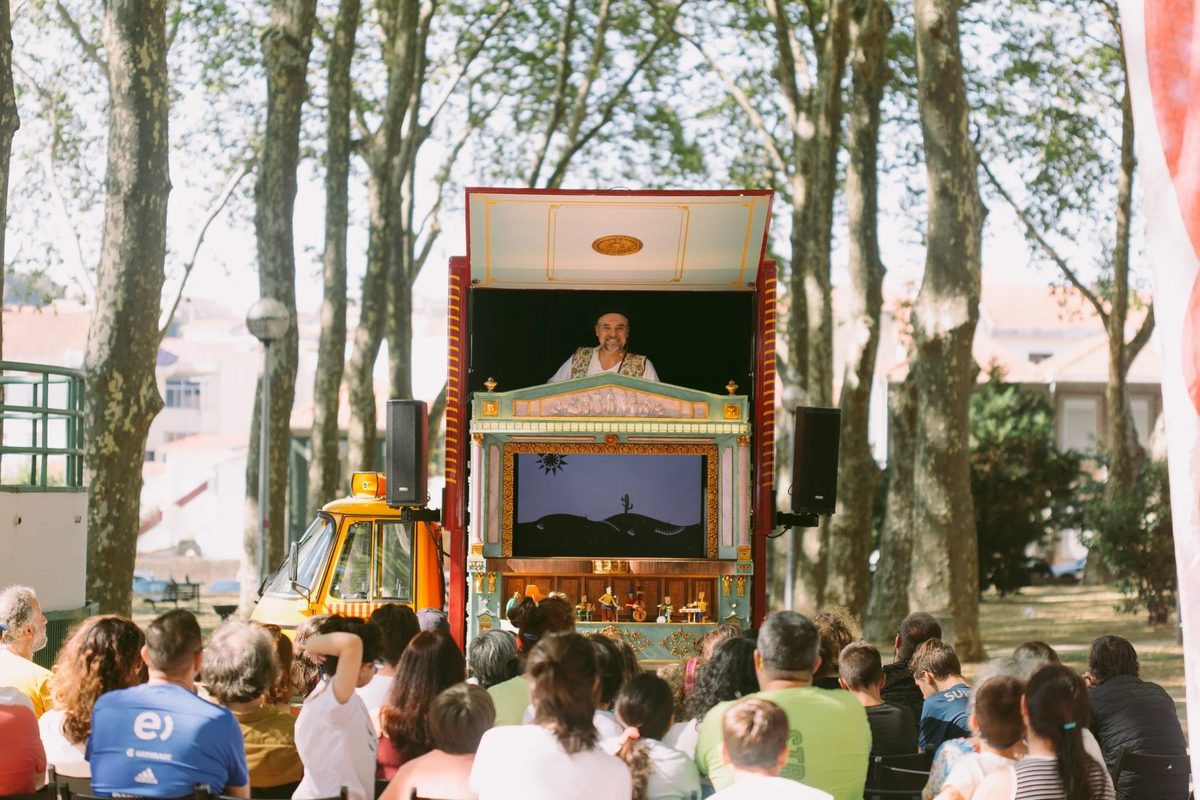
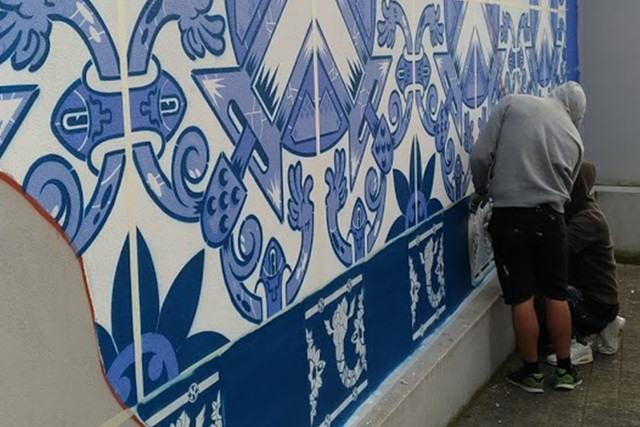
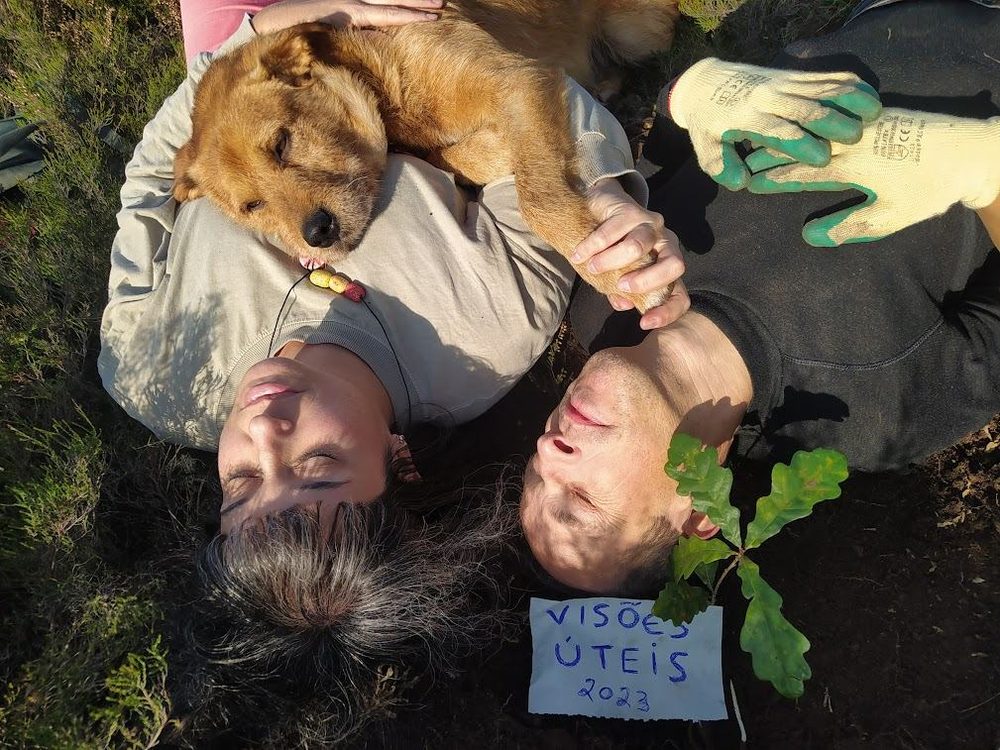
Photo-elicitation only works if the images are specific to the place. These came directly from fieldwork and from the programme's own activities in Campanhã.
94 events, mapped and categorised
Before interviewing anyone, I mapped every public activity the programme ran between 2019 and 2024 — the base layer everything else was built on. 10 of the 94 were run by Visões Úteis, the collective most embedded in the territory. Events split into Performance (55), Interaction (29) and Exhibition (10) by what they actually were; "Politics" wasn't a category anything was filed under during mapping — I added it afterwards, deliberately, because the interviews made clear that "political" was itself a lens people used to see the programme, even when no event was explicitly political.
Small, deliberately deep, not broad
1 programme management (public administration) · 2 partner organisations delivering activities on the ground (Novo Acto, Visões Úteis) · 1 resident participant. Chosen deliberately from the mapping above, not at random — each interview represents a distinct structural position, not a sample size to generalise from.
Every image in the photo-elicitation set was screened against three questions: why I chose it, what narratives it reinforces or challenges, and how my own position as researcher shapes how it gets read.
Whether someone read the programme as "Art" or "Politics" tracked almost perfectly with whether they had personally taken part in it.
The same three questions, four very different answers
Interview themes across the three topic blocks I asked every participant about — programme, territory, and the partner structures that run it.
| Topic | Management | Partner (Novo Acto) | Structure (Visões Úteis) | Resident |
|---|---|---|---|---|
| On the programme | Cultural democracy, visibility, citizenship | Cultural democratisation | Mediation, credibility, trust | Aesthetics, distance from local dynamics, limits |
| On the territory | Fragmented community, culture-consuming | Coexistence, stigma | Listening, interaction, social participation | Belonging, resistance, symbolic inclusion |
| On partner structures | Direct communication, co-management | Possibility, reorganised hierarchies | Listening, interaction, social participation | Affect, continuity, abandonment |
Try the ranking exercise yourself
This is the actual task each interviewee did: look at one image from the set, then rank which category feels closest to what it shows — 1 for the strongest association, 4 for the weakest. Drag to reorder.
- 1Politics⠿⠿
- 2Art⠿⠿
- 3Culture⠿⠿
- 4Everyday life⠿⠿
Drag any row to reorder the list — try ranking it your own way before scrolling to see how the four real interviewees ranked it.
| Management | Partner (Novo Acto) | Resident | Structure (Visões Úteis) | |
|---|---|---|---|---|
| 1 | Politics | Art | Culture | Culture |
| 2 | Everyday life | Politics | Art | Politics |
| 3 | Art | Culture | Everyday life | Everyday life |
| 4 | Culture | Everyday life | Politics | Art |
What the research pointed to
An awareness banner, returned to the community
The clearest finding — that partner organisations' creative decisions were seen as apolitical when they in fact carried real political weight — became a public banner: a direct message helping the community itself recognise that taking part in these activities was already a form of political engagement, of cultural politics, whether it was framed that way or not.
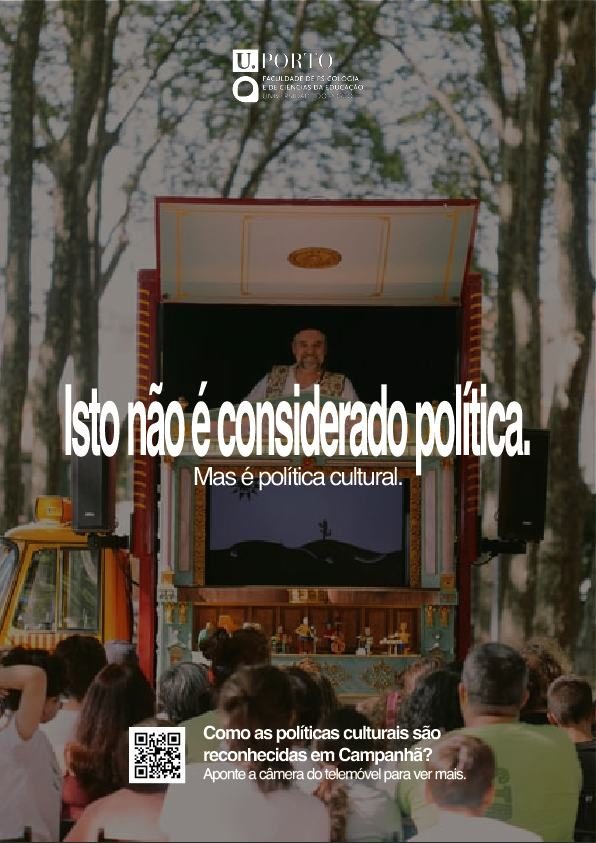
A QR code on the banner links back to the research findings — taking the same visual language used to promote the programme and turning it into a question about how it's actually perceived.
This project sharpened the research skills I bring into design practice — not just visual output, but the process behind it: mapping a landscape before designing for it, running mixed qualitative methods, coding and clustering open-ended material into usable categories, and designing for trust between groups who don't naturally speak the same language. It's the same muscle I use when a brand or product needs to hold together across very different audiences.